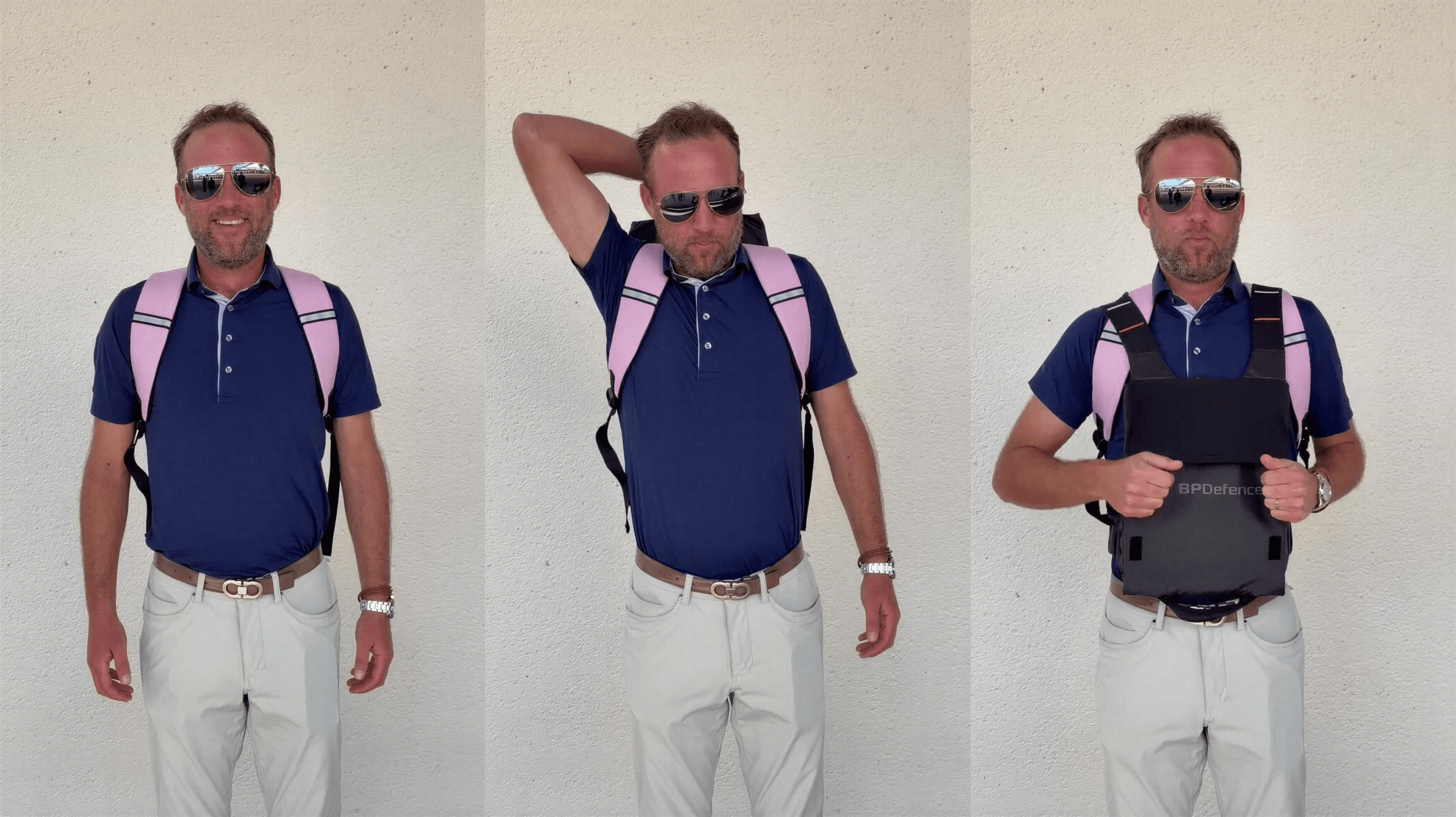
Bullet-resistant backpacks are designed to integrate ballistic protection into an everyday carry item without changing how it is used. While the concept may seem straightforward, the effectiveness of ballistic backpacks depends on how the system is designed, not just the presence of armor. BP Defence treats the backpack as a complete protective system rather than a standard bag with added components.
The Role of Ballistic Panel Design
The performance of bullet-resistant backpacks is driven by how ballistic panels are constructed and how they behave under impact. Modern ballistic panels are made from layered high-strength fibers arranged to manage energy transfer. Instead of relying on rigidity, these panels are engineered to remain flexible while still controlling the force of a projectile.
When impact occurs, the structure of the panel redirects and distributes energy across multiple layers. This layered response is what allows the system to function effectively while maintaining a form factor suitable for everyday use.
At BP Defence, panel construction is paired with strict quality control and consistent material performance to ensure that each panel behaves predictably under tested conditions.
Why Integration Matters
In many ballistic backpacks, armor is treated as an accessory. A compartment is added, and a panel can be inserted if needed. This approach creates variability in how the backpack performs, depending on whether the panel is included, how it fits, and how it is positioned during use.
BP Defence backpacks are designed differently. Ballistic panels are included as part of the system and aligned with the structure of the backpack to ensure consistent placement and coverage. This reduces uncertainty and ensures that the protective elements function as intended.
Movement, Positioning, and Real Use
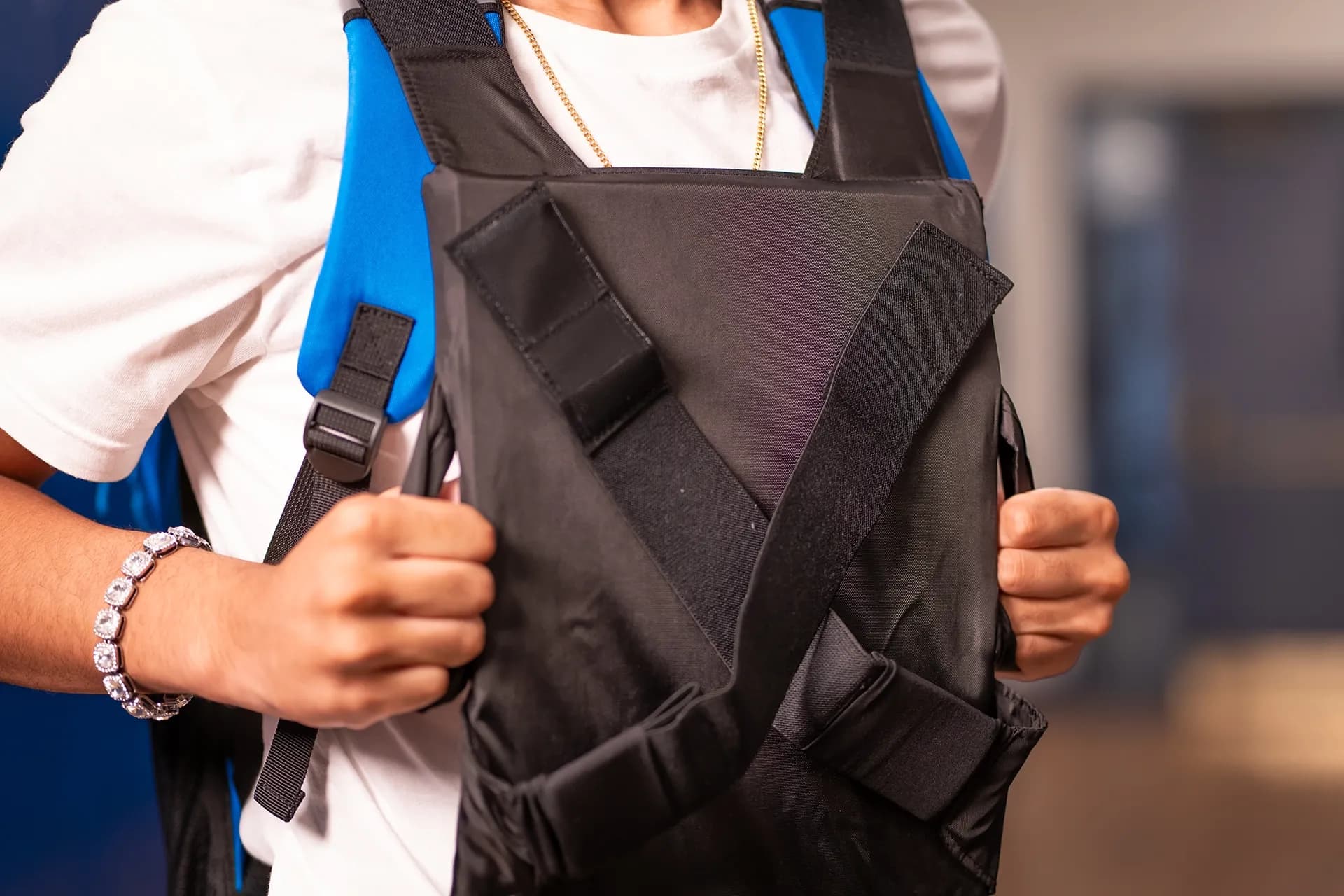
A ballistic backpack is not a fixed piece of equipment. It moves with the user throughout the day, which makes positioning an important part of how protection works in practice. When worn, the backpack naturally aligns with the upper torso. When repositioned, it can act as a directional barrier depending on how it is held or deployed.
BP Defence designs account for this by incorporating a dual-panel configuration. This allows the backpack to protect more than one orientation, supporting both passive and active use depending on the situation.
Balancing Protection and Everyday Function
One of the key challenges in designing ballistic backpacks is maintaining usability. Protection that interferes with weight, comfort, or daily function is less likely to be carried consistently.
At BP Defence, the goal is to maintain a balance between protection and practicality. This includes managing panel weight, maintaining flexibility, and ensuring the backpack functions as a normal carry item without added complexity.
The result is a system that integrates into everyday routines while maintaining defined ballistic performance.

Why Construction Consistency Matters
Small variations in materials, layering, or construction can affect how a panel performs under impact. For this reason, BP Defence emphasizes controlled production processes and independent testing to verify that each batch meets the same performance standards. This ensures that the way a backpack is expected to perform aligns with how it has been tested.
Understanding the System as a Whole
Bullet-resistant backpacks should not be evaluated as a single-feature product. Their effectiveness depends on how materials, panel design, placement, and construction work together.
At BP Defence, this system-based approach guides product development. The objective is not just to include ballistic protection, but to ensure that it functions consistently within the context of real-world use. Understanding how these elements interact provides a clearer view of how ballistic backpacks are designed to perform and what factors actually determine their effectiveness.